When Fear Becomes Policy
by Sami Raihane

And we are back.
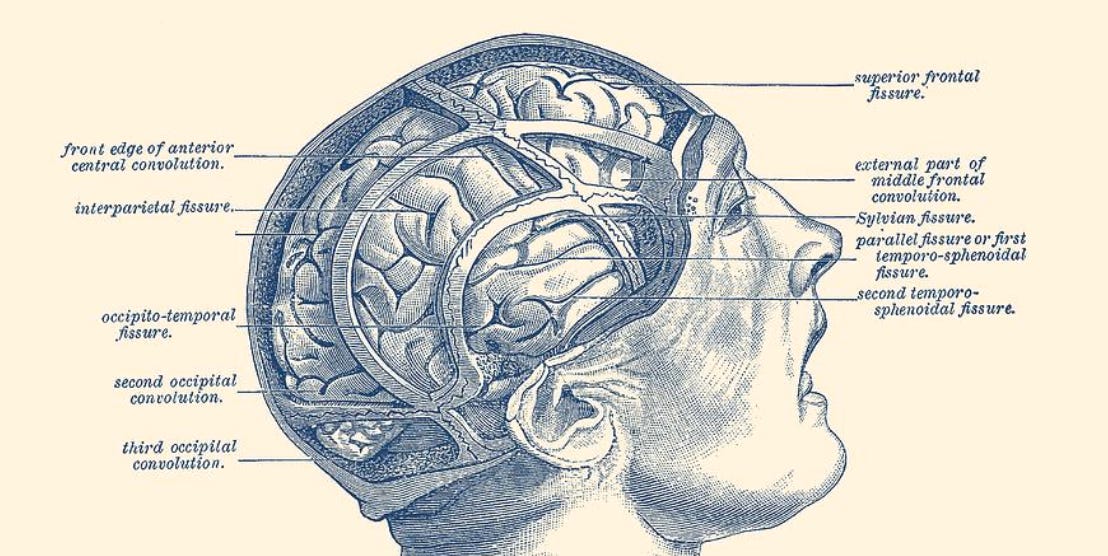
I have been missing in action. Neurology will do that to you. Days collapse into one another as strokes blur into seizures, MRI sequences into medication algorithms, each morning beginning with the same disquieting question: what exactly is happening inside this brain? Every night ends with the uneasy recognition that certainty is a luxury medicine rarely affords.
Outside the hospital, certainty feels even more elusive. Lately, it feels as though the world itself is unraveling.
What is happening inside the National Park Service feels like a quieter, bureaucratic version of the same unraveling. Plaques pried off brick walls, films switched off, climate science erased from redwood groves, not because they were inaccurate, but because they were uncomfortable. The language is sanitizing: “alignment,” “shared values,” “positivity.” But history does not become corrosive simply because it indicts us. When the state decides which truths are too inconvenient to display, memory itself becomes a contested site. What is left behind, blank metal strips and darkened screens, is not neutrality. It is absence, curated. And absence is a political choice.
Living in Albuquerque, an asylum city, you sense the tremors early. Recent news from Minnesota has been especially haunting. Federal immigration enforcement operations have escalated sharply in Minneapolis and St. Paul under what authorities described as one of the largest such operations in state history. In the past few weeks, enforcement actions by federal agents have been reported to involve fatal shootings of U.S. citizens during confrontations with protesters and community members, including 37-year-old Renée Nicole Good in early January and 37-year-old ICU nurse Alex Jeffrey Pretti later in the month, incidents that have prompted widespread demonstrations and renewed calls for independent investigations into the conduct of federal forces.
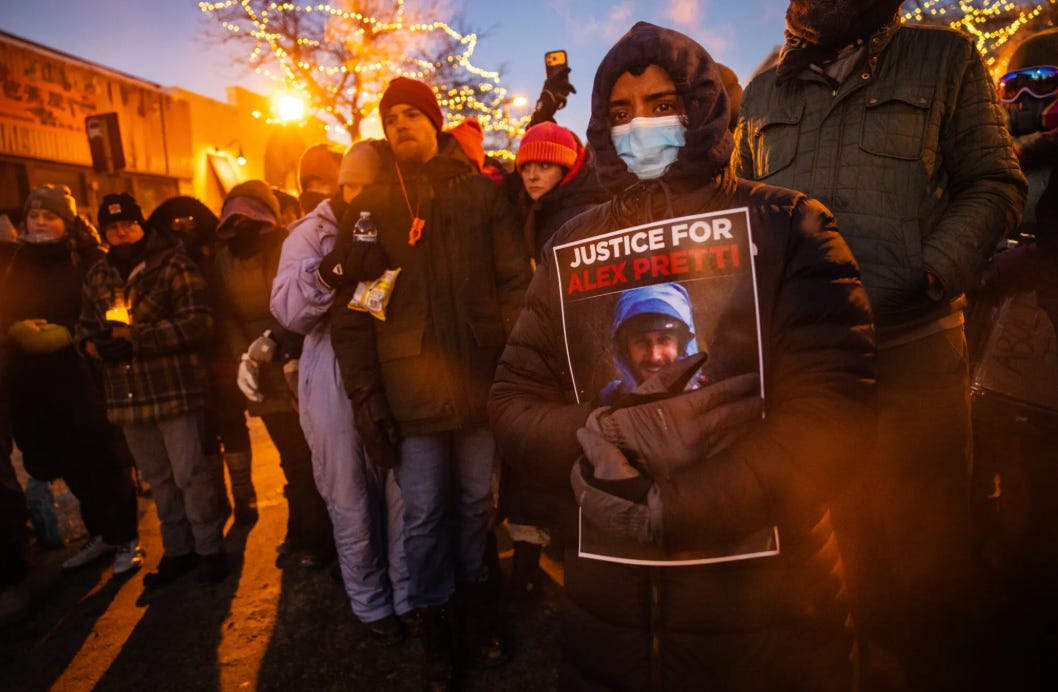
Photo: David Guttenfelder / The New York Times
In another incident, a U.S. citizen of Lao descent was detained at gunpoint by ICE agents outside his home, held in subzero weather in only his underwear before authorities confirmed his citizenship and released him without apology.
These are not isolated video clips viral on social media. These are not distant abstractions. These are unfolding events that challenge the very premise of trust between government and people.
Whether every detail survives perfect fact checking is almost irrelevant when fear has already achieved its purpose. Fear does not wait for verification. It moves faster than truth and embeds itself deeper.
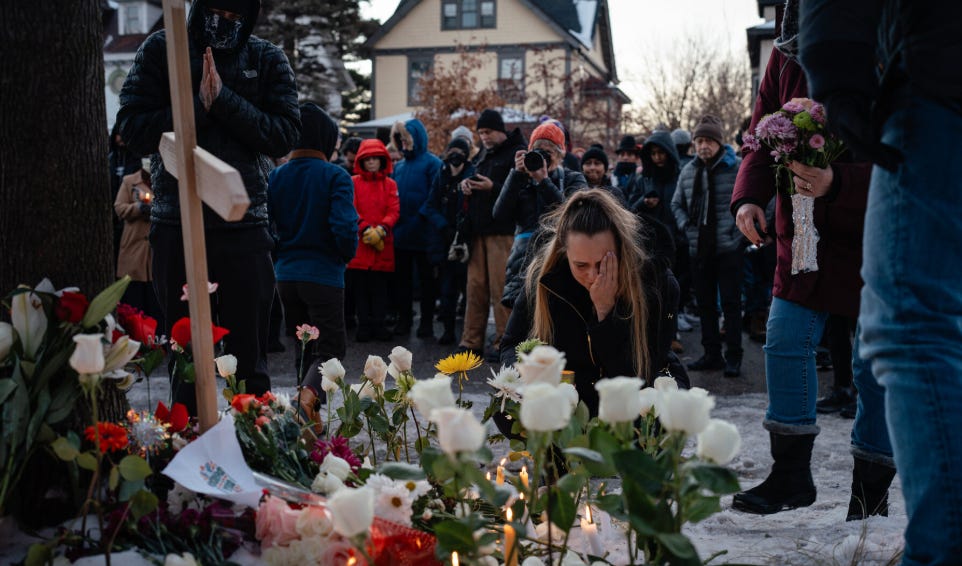
Photo: Jamie Kelter Davis for The New York Times
What is unmistakable is this: it is a grave and dangerous error to equate immigration enforcement with traditional law enforcement. The structures, oversight, and accountability are fundamentally different. When political leaders reduce human beings to words like “illegal” or “alien,” language itself becomes a weapon. History shows what follows when people are stripped first of dignity and then of rights.
Here in New Mexico, the consequences are tangible. Teachers quietly advise families to keep children home when rumors circulate. Parents form human chains outside schools, fueled by nothing but love and terror. Elders carry whistles to alert neighbors if agents are seen nearby. It feels surreal, almost theatrical, like a video game in which some players have infinite lives and others are removed without warning. Except this is not a simulation. These are nurses, students, construction workers, grandparents. These are lives.
Recently, images spread rapidly across Albuquerque of ICE vehicles being transported through the city on trucks. Officials later clarified that they were passing through en route to another state. The explanation did little to calm the panic. Fear, once unleashed, does not dissipate with press statements. When trust has been eroded, every movement feels like a threat.
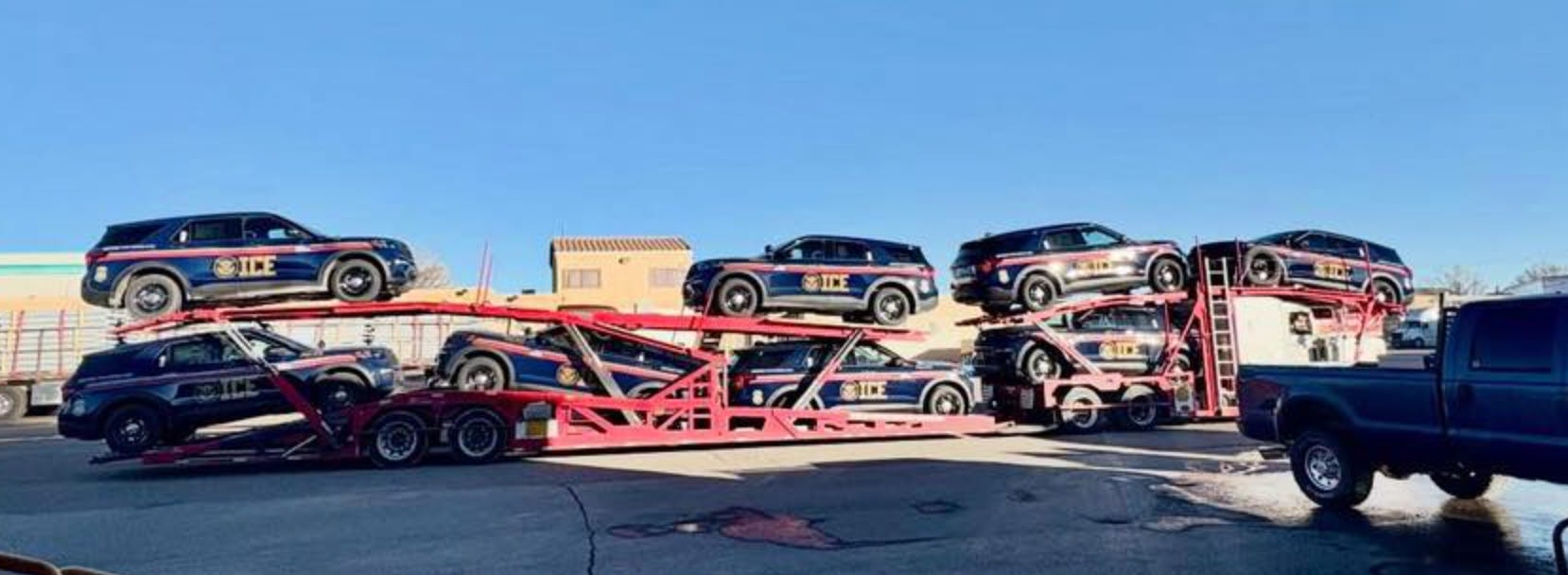
Photo: Ice Vehicles Spotted in Albuquerque via Facebook
I continue to hear the claim that immigrants are taking jobs. But if a job is “taken,” we should ask why. Often it is because someone is willing to work harder, longer, for less security, or because the job itself has been deemed unworthy by those who feel entitled to opportunity. I cannot comprehend how the pursuit of safety and dignity for one’s family is reframed as criminality. I cannot accept what feels like abduction masquerading as policy as an answer.
Imagine instead what those resources could accomplish. Universal health coverage so illness does not bankrupt families. Fully funded classrooms. Food security. Safe housing. Imagine choosing care over cruelty. George Orwell warned us how easily language becomes an instrument of oppression. Watching it unfold in real time is far more unsettling than encountering it on the page.
As a future physician, nearing the end of my training, I make this commitment without qualification. I will care for everyone in my community, regardless of the labels any administration attempts to impose.
My thoughts do not stop at our borders.
Recently, I watched All That’s Left of You at the Guild Cinema in Albuquerque, a small historic theater that has stood since the 1960s. The space itself felt intentional. Dim, intimate, almost reverent. For two hours, the audience sat shoulder to shoulder as the film dismantled distance, geography, and time.
What unfolded on screen was not history as abstraction, but history as inheritance. The erasure of Jaffa was not presented as a single moment of loss, but as a wound passed carefully and cruelly from one generation to the next. Homes emptied. Streets renamed. Family photographs held like relics because they are all that remain. The film lingered on small details, a grandmother’s silence when a place name is spoken, a father recounting memories with the flatness of someone who has learned that grief, repeated too often, must be rationed.
What makes the film unbearable, and necessary, is that it refuses spectacle. There are no dramatic crescendos to release the tension. Instead, the horror accumulates quietly. A child growing up in the shadow of a story they did not live but cannot escape. A family learning to love while knowing that everything they build can be taken again. Trauma here is not loud. It is methodical. It is bureaucratic. It is normalized.
And yet, woven through the devastation is something profoundly human. Jewish and Muslim voices sit beside one another, not in argument, but in recognition. The film insists on a truth that power depends on us forgetting: suffering is not exclusive, and humanity is not divisible. The pain of one people does not negate the pain of another. The attempt to frame justice as a zero-sum game is itself a form of violence.
As the credits rolled, no one moved. The silence in the theater felt heavy, but not empty. It felt like mourning shared among strangers. Walking back into the Albuquerque night, I could not shake the sense that what I had witnessed was not confined to the past, or to Palestine. It was a mirror. The same mechanisms of erasure. The same language of inevitability. The same demand that we look away, or grow numb, or accept that this is simply how the world works.
It is not.
The film made clear that what is happening there, what is happening here, what is happening wherever people are rendered disposable by the state, is not accidental. It is constructed. And anything constructed can be dismantled.
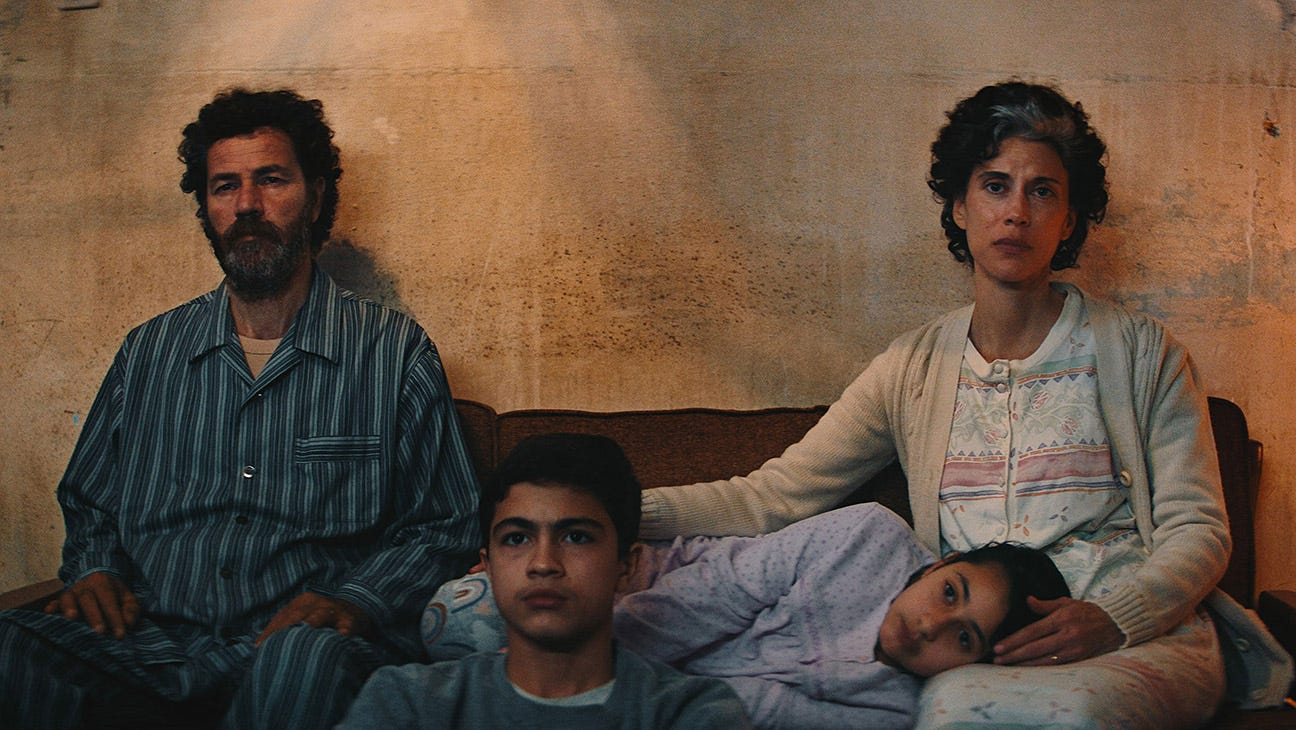
Photo: Courtesy of Sundance Institute
Still, the parallels were impossible to ignore. Livelihoods erased by overwhelming power. Silence rationalized as complexity. Moral paralysis disguised as nuance. I thought of Germany in the 1940s, not as a provocation, but as a warning. Not of identical outcomes, but of familiar mechanisms: the slow normalization of exclusion, the bureaucratization of cruelty, and the way state power learns to make erasure feel administrative rather than violent. I thought of America now. I thought of how often we remain silent, not because we are indifferent, but because fear is persuasive. Fear of being identified. Fear of retaliation. Fear of consequences.
My family pleads with me not to be publicly visible in opposition to immigration enforcement. They fear I will be harmed or worse, killed. I understand that fear intimately. I have felt it standing at demonstrations for Palestine as cars sped past, windows down, voices shouting hatred. But history does not remember who stayed comfortable. It remembers who showed up.
Amid all of this, something else is crystallizing.
During rounds, I walked into a patient actively seizing. There were no grand gestures, no dramatics. Only calm, precise action. Airway secured. Medications administered. Reassurance offered even in chaos. I watched my team narrate every step while pulling a life back from the edge. The hair on my arms rose. A current moved through my chest. In that moment, the purpose of my path felt undeniable.
Medicine does not insulate us from violence. It does not pause the world’s cruelty. The same week I helped care for critically ill patients, my father was robbed at his convenience store, threatened with an axe, running for his life. I watched the security footage later, unable to leave the hospital, aware of how narrowly his name avoided joining America’s endless ledger of violence.
That is the truth medicine teaches you quickly. Our growth does not halt the world’s momentum.
So when I hear slogans about making America great again, I find myself asking a harder question. Great for whom? How can greatness be built on fear, exclusion, and sanctioned violence? I do not yet have that answer. What I do know is this: becoming a doctor gives me a way to resist. Through care. Through presence. Through refusal.
I will work for everyone. Even for those who choose cruelty. If someone finds pride in enforcing suffering, I can only believe that something fractured long before the uniform was donned. Harm reproduces itself unless interrupted.
I do not know whether human nature will outgrow its appetite for domination. But I do know that compassion is not passive. It is a discipline. Like medicine, it must be practiced deliberately, especially when it costs something.
And so, we are back, learning in real time what it costs to care in a world that keeps asking us not to.
Love,
Sami
I live in the EU and reading this gave me chills. It feels surreal knowing this is your reality and everyday feels uncertain and people divided.
You’re writing about such an important topic and one that I appreciate you sharing it in an impactful way. This is truly heartbreaking 💔